Gaming hardware is changing generations: AI, VR, and platforms
Gaming hardware does not evolve in straight lines. Some cycles bring incremental spec bumps and others shift the entire landscape beneath your feet. This generation of changes affects how you play, where you play, and what you can actually access.
The Steam Deck proved portable PC gaming works. Meta Quest showed standalone VR has a real market. Epic’s legal battles forced platform holders to loosen their grip on distribution. These aren’t isolated events but connected shifts that reshape what gaming hardware means beyond just faster GPUs and higher refresh rates.
If you’re planning hardware upgrades or trying to understand where gaming is headed this guide breaks down the five areas that matter most right now. VR technology is taking a new direction with Valve’s Steam Frame approach. Platform distribution rules are changing after years of legal fights. PC handhelds moved from experiment to mainstream option. Display technology pushed into territory where you need to question whether premium specs deliver real benefits. And recent demanding games reveal what hardware you actually need versus what marketing wants you to buy.
The evidence behind these trends is visible across several concrete shifts. Steam Deck and SteamOS pushed PC handheld compatibility into everyday buying decisions. Fortnite returned to Google Play worldwide in 2026 after the Epic and Google settlement. Valve’s Steam Frame documentation now describes a headset built around both low-latency PC streaming and standalone play. These are not isolated moments but signals that the gaming hardware landscape is actively restructuring.
1. VR and XR shift: Steam Frame, standalone VR, and PC streaming
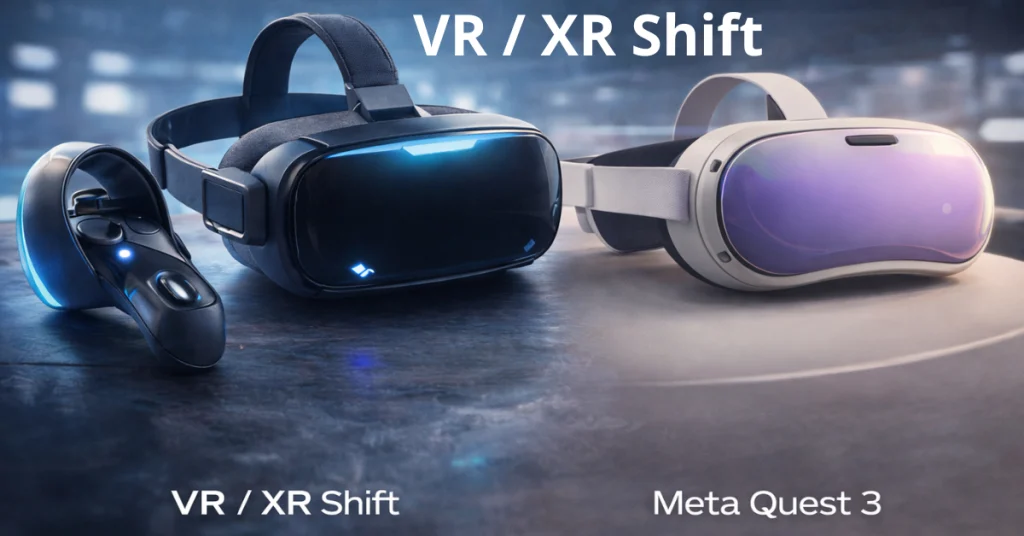
Virtual reality split into two camps over the past five years. You either bought a standalone headset like Quest 3 that runs games locally with mobile-grade graphics or you bought a PC VR headset that needs cables and a powerful computer. Valve looked at this divide and decided both approaches miss the point.
Valve’s Steamworks documentation describes Steam Frame as a standalone headset designed for low-latency streaming from your gaming PC while also supporting standalone VR and non-VR experiences. The device supports ARM64 execution models, which means compatible games can run locally when you are away from your desk. But the innovation shows up in how it handles PC streaming through foveated streaming that uses eye tracking to prioritize visual detail where you are looking.

Hands-on testing has focused heavily on latency because wireless VR has always struggled with compression artifacts and input lag. That matters because wireless VR always struggled with compression artifacts and input lag that broke immersion. If Valve keeps streaming stable without turning setup into a networking project, it removes a major barrier to VR adoption.
The specs tell part of the story. Valve’s documentation highlights high-resolution displays, inside-out tracking, integrated audio, SteamVR support, and OpenXR compatibility. The eye tracking is not just a spec sheet feature; it supports foveated streaming and can reduce rendering pressure when the software supports it.
Battery life estimates sit at 2-3 hours for streaming and 1.5-2 hours for standalone gameplay. That’s identical to Quest 3 which means you’re looking at session-length VR rather than all-day wireless freedom. But most VR sessions last 45-90 minutes anyway due to comfort and fatigue factors.
The real question becomes software support. Valve is building a Steam Frame Standalone Verified path for software, but compatibility will still depend on Proton, ARM64 support, Android APK support, motion controls, and room-scale behavior. VR has additional complexity that desktop games do not require.
VR remains a smaller gaming segment than consoles, mobile, and PC, but the direction of travel is clear: standalone and wireless designs matter. Steam Frame needs to solve the content problem, not just the hardware problem.
Price positioning matters too. Valve has not confirmed final pricing in the official documentation checked for this update, so direct comparisons with Quest 3 and premium PC VR setups remain incomplete. You’re paying extra for the flexibility to access your Steam library without compromising on visual quality. Whether that justifies the premium depends entirely on how much you value that specific use case.
Understanding why Valve’s approach matters and how Steam Frame compares to other VR options helps decode whether this represents the future of VR or just another niche option for enthusiasts with specific needs.
2. Platforms and distribution: store rules and major returns
Epic Games pulled Fortnite from the Google Play Store in August 2020 and most people thought it was a risky gamble that would hurt player access. Fortnite returned to Google Play in the United States in December 2025, then returned worldwide on March 19, 2026, after Epic and Google said they had settled their disputes globally. This wasn’t just about one popular game coming back to one store but about who controls distribution and how much power platform holders have over what you can install.
The legal battle exposed fundamental tensions in mobile and PC gaming ecosystems. Google and Apple maintained that their 30% commission on in-app purchases funded platform development and security. Epic argued this constituted an illegal monopoly that strangled competition and innovation. Google’s U.S. policy update now allows eligible developers to use alternative billing and external content links while the injunction rules are in effect.
Mobile gaming remains one of the largest parts of the games market, and platform fees still take a major share of in-app spending. Before these changes, Google Play Billing usually kept the platform inside the payment flow. Alternative billing can reduce platform dependence, but the exact financial benefit depends on each developer’s region, payment provider, fraud controls, and support costs.
The immediate impact is easier to see in policy than in reliable public revenue data. Google says third-party U.S. Android app stores can start onboarding into its Play program on July 15, 2026, before the program takes effect on July 22, 2026. Epic also promotes 20% back in Epic Rewards when players use Epic’s payment system in supported checkout flows.
But fragmentation creates friction. Players now manage multiple payment methods across different apps. Refund processes vary by developer instead of going through unified platform systems. Some developers lack the technical resources to build secure payment infrastructure which means the savings on fees get eaten by implementation costs.
The PC gaming market already dealt with this fragmentation. You need Steam for most games, Epic Games Store for exclusives, Battle.net for Blizzard titles and EA app for Electronic Arts content. Nobody loves having five different launchers but players adapted because each platform offered enough value to justify the hassle. Mobile gaming is heading toward the same messy ecosystem.
Microsoft has discussed an Xbox mobile store that would compete with Google Play and the App Store if regulatory conditions make it viable. That means more competition and potentially better deals for players alongside more complexity in managing where games live and how you pay for them.
Breaking down what Fortnite’s return actually means for players, developers and mobile distribution shows how these platform shifts affect everyone who plays or creates games regardless of whether you care about Fortnite specifically.
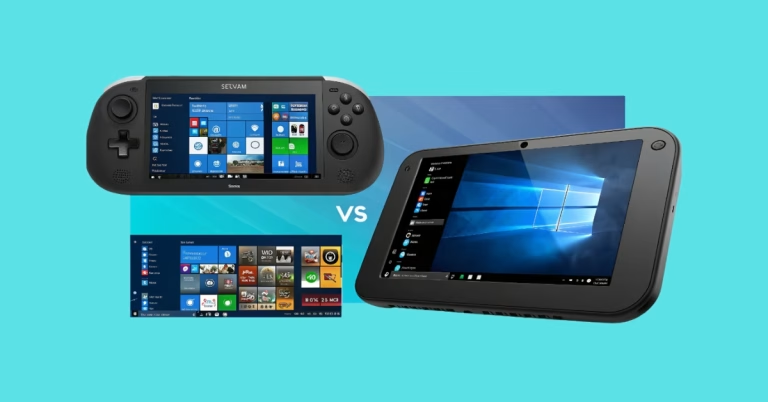
3. PC handhelds go mainstream: SteamOS vs Windows
The Steam Deck launched in February 2022 as a weird experiment that most people expected to flop. Valve had a track record of abandoned hardware projects and portable PC gaming seemed too niche to matter. Three years later, PC gaming handhelds no longer feel like a niche experiment. ASUS, Lenovo, MSI, GPD, and Ayaneo all pushed the category into a much more visible part of gaming hardware.
Every major manufacturer now has a handheld in their lineup. ASUS released the ROG Ally. Lenovo launched the Legion Go in both Windows and SteamOS versions. MSI entered with the Claw. Even smaller players like GPD and Ayaneo expanded their catalogs. But the choice between SteamOS and Windows determines your entire experience in ways that specs sheets don’t capture.
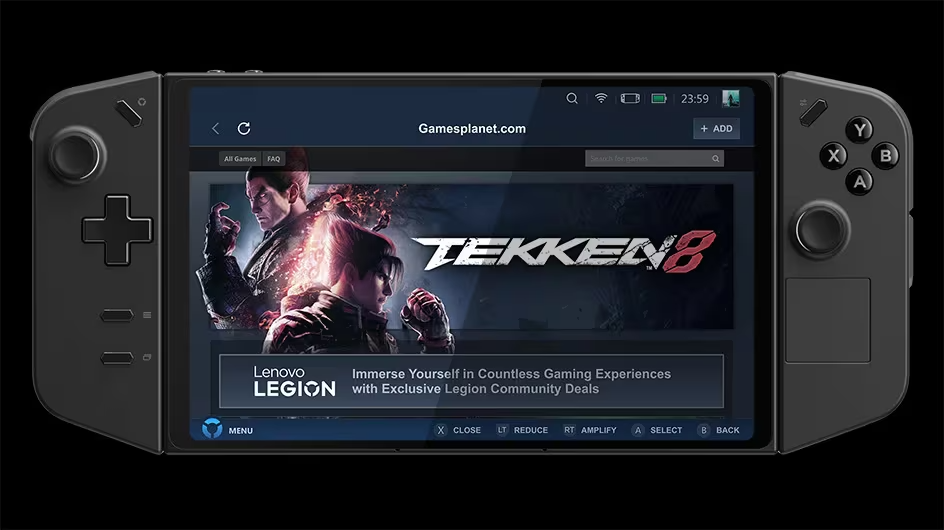
SteamOS turns a PC into something that feels like a Nintendo Switch. You press power and you’re in a controller-friendly interface within seconds. Games launch quickly and sleep mode actually works like you expect from a console. Windows gives you full PC flexibility but none of that console simplicity. You boot to a desktop interface designed for mouse and keyboard which means clicking through menus and dealing with sleep mode that sometimes works and sometimes wakes up confused.
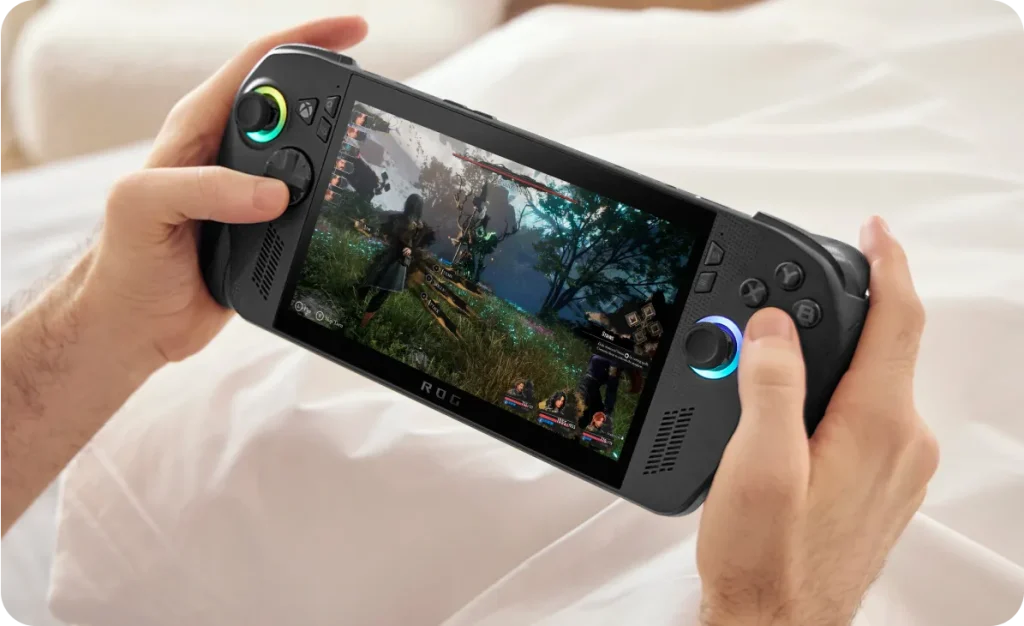
The battery life difference matters more than most people realize. Battery life testing across handhelds often shows how much the operating system, power profiles, and background services matter. SteamOS can feel more console-like, while Windows gives broader launcher and anti-cheat compatibility. Standby drain tells an even bigger story. Leave a SteamOS device in your bag for a week and it still has charge. Do the same with Windows and you’re reaching for the charger.
Game compatibility creates the real tension. Windows runs everything because it’s just a PC. Every Steam game works plus Epic Games Store, Game Pass, EA app and GOG. SteamOS runs games through Proton which translates Windows calls to Linux. Valve’s compatibility ratings help, but they do not remove the need to check specific games you want to play. Destiny 2 doesn’t work because of anti-cheat. Most Game Pass titles don’t work. Some multiplayer games block Linux entirely.
Price positioning can favor SteamOS when a device avoids Windows licensing and focuses its software stack around gaming. The value equation shifts based on your library. If you own 200 Steam games and rarely use other launchers then paying extra for Windows makes little sense. If you subscribe to Game Pass and play Xbox exclusives then Windows justifies the premium.
Deciding between SteamOS and Windows handhelds requires understanding the specific tradeoffs around battery life, compatibility and comfort because the operating system shapes your daily experience far more than processor specs or screen resolution.
4. Display tech escalation: do 500Hz QD-OLED gaming monitors actually matter?
Gaming monitor specs keep climbing and at some point you need to ask whether anyone actually needs 500Hz refresh rates. The Gigabyte Aorus FO27Q5P launched in November 2025 as the first QD-OLED panel pushing half a thousand frames per second at $899. Marketing promises the ultimate competitive advantage but the reality involves more nuance than headline numbers suggest.
Refresh rate measures how many times per second your monitor updates the image. A 500Hz monitor refreshes every 2 milliseconds compared to 16.67 milliseconds at 60Hz. That sounds impressive until you consider human perception limits and diminishing returns. Tom’s Hardware tested input latency across different refresh rates and found the jump from 60Hz to 144Hz cuts latency by 9.8ms while the jump from 360Hz to 500Hz only saves 0.8ms.
Professional esports players show measurably better reaction times and accuracy at higher refresh rates even when they can’t consciously perceive the difference. But the target audience for 500Hz displays remains narrow. Casual and intermediate players see minimal benefit. Advanced competitive players get moderate improvement. Only professional esports competitors truly justify the premium.
QD-OLED technology combines quantum dot color with OLED self-emissive pixels which delivers infinite contrast ratio since pixels can turn completely off. The visual quality improvement over LCD is dramatic with perfect blacks and faster pixel response times of 0.03ms versus 1-5ms for traditional panels. But the technology carries downsides including higher cost, potential burn-in with static elements and lower peak brightness than high-end LCDs.
The GPU requirement reality hits hard. A 500Hz monitor only helps if your PC can actually push 500 fps which requires serious hardware and significant graphical compromises. Testing showed you need minimum an RTX 4070 Ti or AMD 7900 XT to justify 500Hz refresh rates in competitive titles like Valorant and Counter-Strike 2. Anything less means paying for refresh rates you can’t actually use.
The total system cost matters when evaluating display investments. A 500Hz monitor at $899 plus a GPU capable of driving it like an RTX 4080 at $1000-1200 means roughly $1900-2100 just for your display setup. For most players that money goes further invested in a 240Hz OLED panel plus a better GPU that improves frame rates across all games not just competitive titles.
Learning whether 500Hz QD-OLED monitors deliver real benefits versus expensive marketing hype helps you make informed decisions about where premium display technology actually improves your gaming experience versus just inflating your budget.

5. Visual showcases influence gaming hardware decisions: what Digital Foundry’s 2025 awards reveal
Digital Foundry released their Graphics of the Year awards on December 12th and the technical breakdowns tell you more about what hardware to buy than any manufacturer marketing campaign. They don’t just pick pretty games but analyze which titles push boundaries and what that means for your GPU, CPU and storage choices going forward.
Their 2025 awards highlighted three technical trends that directly impact hardware decisions. Ray tracing matured from optional effect to baseline feature with games like Avatar Frontiers of Pandora and Alan Wake 2 building entire lighting systems around RT technology. You can’t just disable ray tracing anymore without breaking the intended visual experience which means you need at minimum an RTX 4060 or RX 7700 XT to play modern AAA titles at acceptable frame rates.
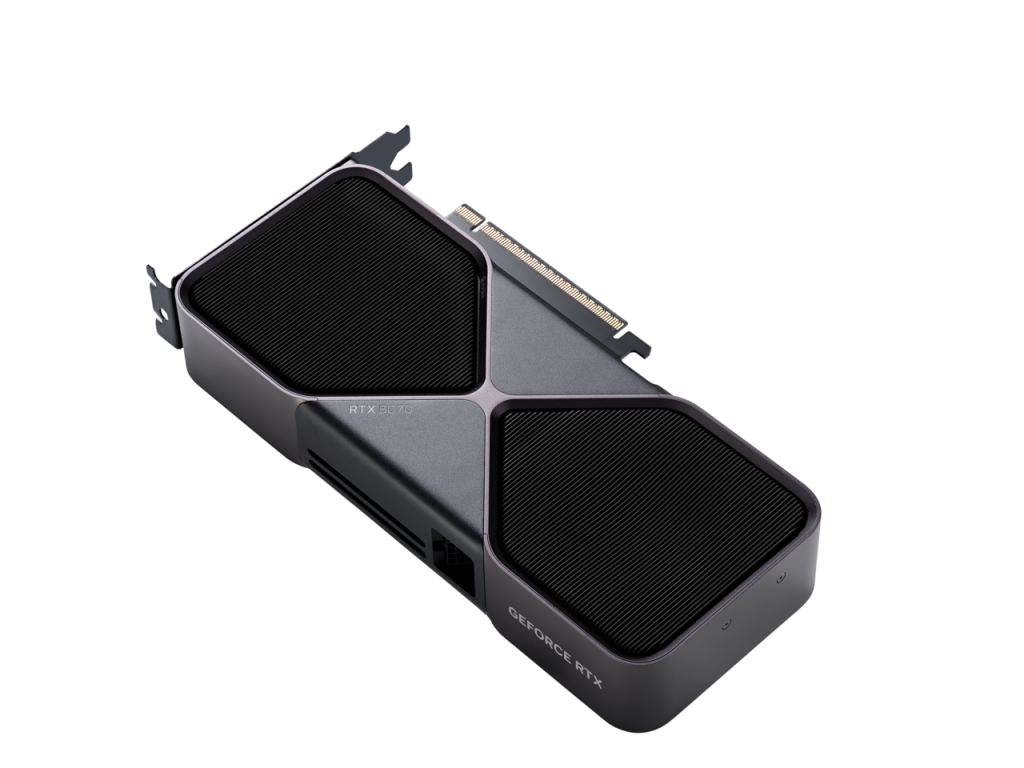
Upscaling technology reached the point where running native resolution makes little sense for most players. DLSS Quality mode at 1440p upscaling from 960p delivers nearly identical image quality to native while providing 40-60% better performance. This means you can buy a tier lower GPU and still hit your performance targets. AMD’s FSR 3.1 closed the quality gap significantly while Intel’s XeSS 2.0 works across all GPU brands with competitive results.
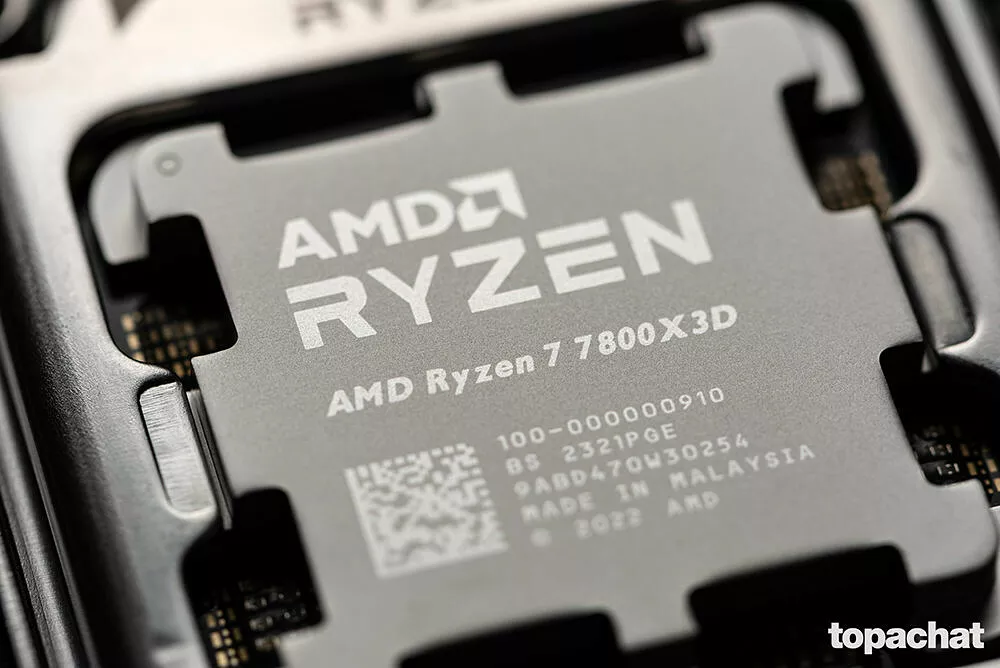
CPU bottlenecks emerged as a real concern in open world titles. Starfield hammered processors harder than GPUs in dense areas and struggled on 6-core chips. The Ryzen 7 7800X3D consistently topped gaming benchmarks due to its large cache while Intel’s 14th gen processors competed well in titles leveraging higher clock speeds. The traditional “just upgrade your GPU” advice no longer applies universally.
Storage speed matters now with DirectStorage implementations in several 2025 titles. Testing showed NVMe Gen 4 drives delivering 5-7GB/s eliminated brief hitches that appeared on SATA SSDs. The cost difference is minimal at $10-15 premium for Gen 4 which makes it baseline for new builds.
Understanding what Digital Foundry’s graphics analysis reveals about hardware priorities translates technical benchmarks into actionable buying decisions so you invest in components that actually improve your gaming experience rather than chasing marketing specs.
Gaming hardware now asks different questions than it did even two years ago. The focus shifted from raw performance metrics to ecosystem choices that shape how you actually play. VR technology moved toward hybrid approaches that balance convenience with capability. Platform distribution opened up after years of locked ecosystems. Portable PC gaming evolved from niche curiosity to legitimate mainstream option. Display technology pushed into territory where diminishing returns require honest evaluation. And the most demanding games revealed that balanced builds matter more than flagship components.
The common thread across these changes is flexibility. Hardware that locks you into single use cases or closed ecosystems carries more risk now than ever. The Steam Deck succeeded because it gave players options. Steam Frame attempts the same approach for VR. Platform policy changes force the same openness on mobile distribution whether companies want it or not.
Your hardware decisions should reflect these shifts. Think about ecosystems and compatibility alongside specs. Consider where gaming is heading not just where it is today. The generation change isn’t about one killer feature but accumulated shifts that add up to a fundamentally different landscape.
Start with the decision that affects your daily gaming most directly. Choosing the right PC handheld between SteamOS and Windows represents the clearest example of how these ecosystem tradeoffs play out in practice and helps you understand similar choices across all your gaming hardware investments.