FC 25 tactical overhaul and Rush mode bring excitement
EA Sports FC 25 introduces a revamped tactical system and an exciting Rush mode. This FC 25 tactical overhaul review looks at how those changes offer notable innovations for longtime fans. However, these advances are tempered by long-standing persistent problems, giving the impression of a partial step forward rather than a complete leap. While the game showcases EA’s ambition to evolve the football simulation experience, it simultaneously highlights the franchise’s ongoing struggle to address fundamental issues that have plagued recent iterations. The result is a game that excels in specific areas while disappointing in others, creating a mixed experience for players across different modes.
1. FC IQ: the heart of the FC 25 tactical overhaul
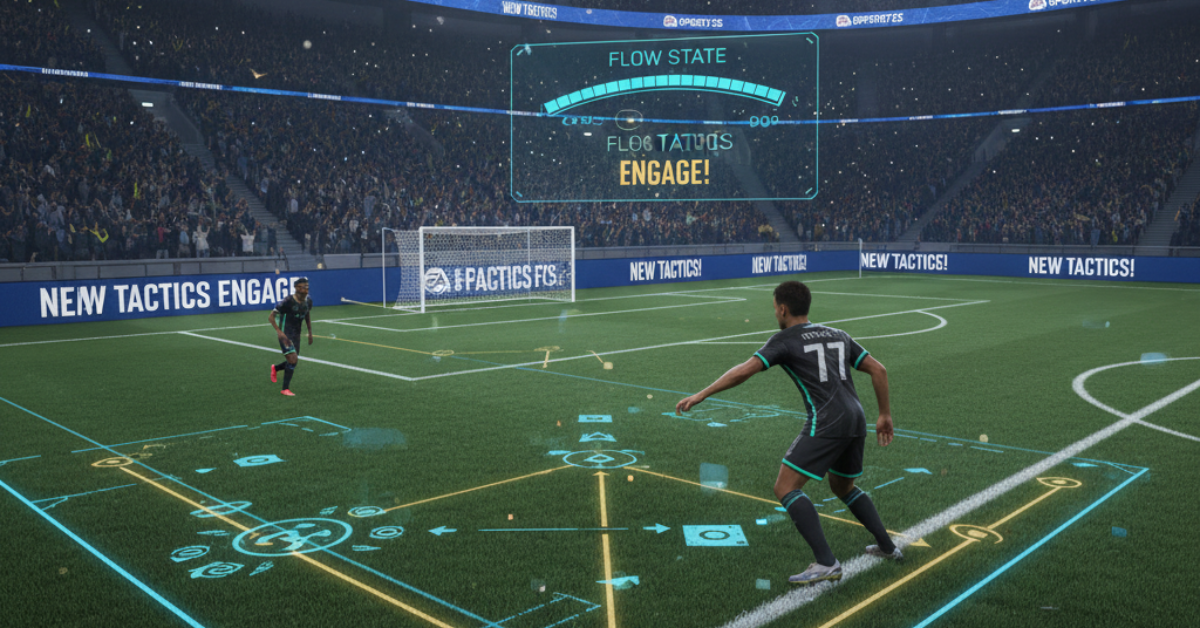
The flagship feature of the FC 25 tactical overhaul is FC IQ, which changes how tactics are approached in the series. The old system has been replaced by Player Roles, which dictate how each player behaves with and without the ball. Players now have much more flexibility to shape their team’s identity, from defensive depth to build-up style, whether favoring short passes, counter-attacks, or a balanced approach.
Central midfielders, for example, can now assume one of five distinct roles, including the innovative new half-winger position. This allows the midfielder to drift wide during attacks, creating overloads on a flank and providing additional width, reminiscent of Kevin De Bruyne’s dynamic style at Manchester City. Roles also feature a Focus option, allowing players to prioritize attack or defense, adding layers to the FC 25 tactical overhaul that go beyond basic formation choices and enabling more nuanced tactical setups.
Even fullbacks can assume specialized positions such as the Falseback, drifting centrally to reinforce midfield during possession phases. However, not all players excel in all roles; Role Familiarity guides players to optimize positioning and performance. For example, Vinícius Júnior performs well as a traditional winger, but switching him to an inverted winger unlocks superior tactical intelligence, creating smarter runs, better positioning, and faster transitions between defense and attack.
This FC 25 tactical overhaul represents a shift in how players approach team building and match preparation. Rather than simply selecting a formation and letting the AI handle the rest, managers must now consider each player’s individual strengths, weaknesses, and natural tendencies. A midfielder with excellent passing range but poor defensive awareness might thrive as a Deep-Lying Playmaker but struggle as a Box-to-Box midfielder required to cover ground defensively, which is why understanding EA Sports FC 25 gameplay and tactical systems becomes crucial for competitive success.
2. Benefits for Career Mode and Ultimate Team

The FC 25 tactical overhaul enhances both Career Mode and Ultimate Team in meaningful ways. Managers now face genuine strategic choices: do you adjust your formation to match your available players, or do you assign specific roles to players regardless of the impact on overall team shape? This creates a more engaging and thoughtful team-building experience that goes beyond simple statistics like speed or shooting accuracy.
Formations whether 3-5-2, 4-3-3, or others now influence defensive and offensive shapes more dynamically than in previous versions. Even two teams with identical formations can approach matches completely differently based on role customization, adding substantial depth and variety to each game. A 4-3-3 with attacking fullbacks and a holding midfielder plays entirely differently from the same formation with defensive fullbacks and a box-to-box midfielder.
In Career Mode specifically, the FC 25 tactical overhaul makes youth development more strategic and rewarding for long-term managers. Coaches must now consider not just a player’s current attributes but also their potential to learn and master specific roles over time. A young fullback might be carefully groomed to become an attacking wingback or developed into a defensive-minded traditional fullback, with training sessions and match experience gradually shaping their role familiarity. This long-term planning adds meaningful engagement that was sorely missing in previous iterations.
3. On-field experience: incremental improvements
Despite these exciting tactical options, the core gameplay itself feels familiar in ways that limit the FC 25 tactical overhaul. Player movements and shooting animations have received noticeable improvements, and the overall pace is slightly slower to accommodate the new tactical mechanics. Yet familiar problems stubbornly remain: tackles continue to be unreliable, player switching can be frustratingly inconsistent, goalkeepers remain unpredictable, and spamming skill moves is still often more effective than patiently building plays through intelligent passing.
The shooting mechanics have received subtle refinements, with improved ball physics for long-range efforts and acrobatic volleys. However, the defensive AI continues to exhibit questionable decision-making patterns, with defenders sometimes inexplicably failing to track dangerous runs or leaving critical spaces unmarked during transitions.
Goalkeeper behavior remains perhaps the most frustrating aspect of the entire game. While keepers can occasionally pull off spectacular saves that seem almost superhuman in their reflexes, they’ll also make baffling errors on relatively routine shots that any professional keeper should handle comfortably. This inconsistency severely breaks immersion and can decide matches in ways that feel arbitrary rather than skill-based.
Input delays in online matches significantly exacerbate the frustration, particularly in competitive Ultimate Team Rivals matches, while menu navigation suffers from noticeable lag and occasional crashes, notably on PS5 when accessing the store or finishing matches. These technical issues are especially disappointing given that similar problems have been extensively reported in previous versions of the game.
4. Rush mode: fast and chaotic fun
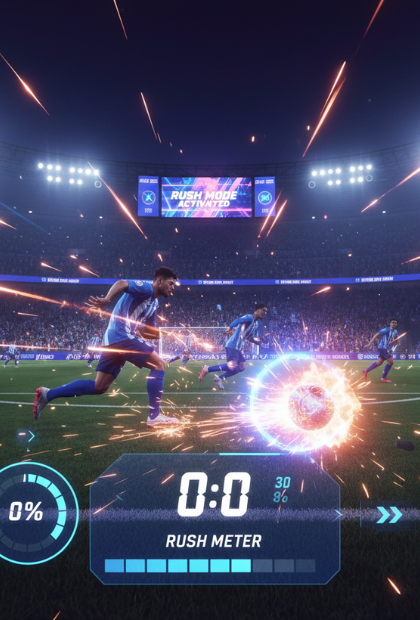
EA Sports FC 25’s Rush mode replaces the departed Volta-style street football focus with five-a-side matches featuring an AI-controlled goalkeeper and four field players. Played on smaller, more compact pitches with unique rule modifications, Rush offers chaotic and energetic gameplay that prioritizes excitement over realism. Race to Ball kick-offs send players rushing forward to win initial possession, while blue cards replace permanent red-card dismissals and keep matches competitive.
Rush is available across multiple game modes including Kick-Off, Career Mode, Ultimate Team, and Clubs, providing flexibility in how players engage with this fast-paced format. Manager Career integrates youth tournaments to develop rising stars, while Ultimate Team allows casual drop-in matches with random players or coordinated games with friends. While the mode can be frustratingly chaotic at times, especially with uncooperative teammates in random matchmaking, it provides a genuinely refreshing alternative to traditional 11v11 gameplay.
The smaller pitch dimensions and reduced player count create a fundamentally different experience from standard matches. Every touch matters significantly more, individual mistakes are punished almost immediately, and the action rarely slows down. This makes Rush a useful companion to the FC 25 tactical overhaul when players want quick sessions without a full match.
5. Career Mode improvements
Career Mode receives modest but welcome improvements:
- Greater flexibility in board expectations and adjustable player development speed
- Adjustable wind and weather effects within gameplay simulation settings
- Addition of five licensed women’s leagues, the UEFA Women’s Champions League, and a rotating selection of ICONs in Player Career
These improvements increase overall immersion and player autonomy, even if they don’t dramatically redefine the mode’s fundamental structure. The ability to adjust board expectations means managers can tailor their career experience to match their preferred challenge level, whether managing title contenders or rebuilding lower-league clubs.
Weather and wind settings add customization to the match experience. These options sit within gameplay simulation settings, allowing players to tune Career Mode toward a more realistic or personalized rhythm.
6. Ultimate Team: concerns about rewards and monetization
Ultimate Team remains largely unchanged structurally, but with some highly controversial adjustments:
- Rivals weekly rewards are more demanding, with higher win targets
- The upgraded weekly Rivals target rose from seven to 15 wins
- Champions Play-Offs now require three wins from five matches, raising the required win rate to 60%
While tactical improvements add depth, these monetization decisions can feel punitive and actively detract from overall enjoyment. The increased match requirements demand more time investment, creating a progression system that can feel more demanding than rewarding for many players.

EA Sports FC 25 presents notable new features, with FC IQ and Rush mode giving the FC 25 tactical overhaul its strongest moments. Yet the series still struggles with enduring gameplay issues and online frustrations, leaving Ultimate Team and the core game largely unchanged from previous years. For longtime fans, there’s definite fun to be had, particularly in experimenting with new tactics and enjoying chaotic five-a-side matches. However, for players seeking a significant leap forward, EA Sports FC 25 represents a mid-table effort, an evolution rather than a revolution.
While FC IQ brings welcome tactical depth that rewards strategic thinking, FC 25 Ultimate Team and Career Mode expectations remain important for players trying to balance competitiveness and enjoyment.