EA Sports FC 25 gameplay, tactics and long road ahead

EA Sports FC 25 introduces two flagship features: a revamped tactical system (FC IQ) and Rush mode. This FC 25 gameplay review examines how both features try to refresh a franchise that has faced increasing criticism for incremental updates. Yet, despite all its improvements and the genuine innovation in certain areas, long-standing problems prevent the game from fully realizing its potential. The result is a title that tantalizes with possibilities while simultaneously frustrating with familiar shortcomings that have plagued the series for years.
1. FC IQ and Player Roles: a tactical revolution
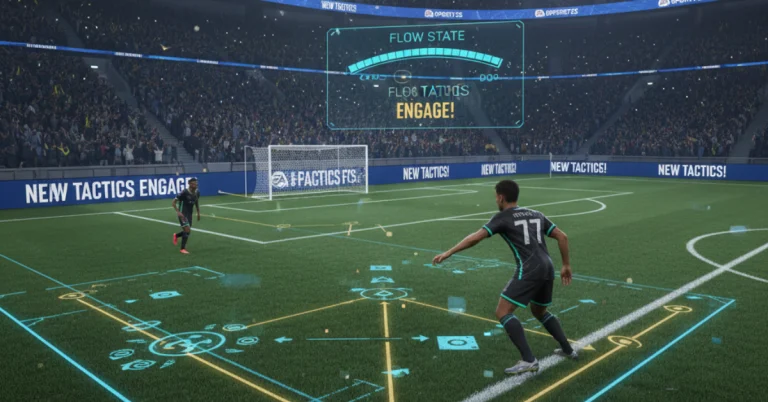
The FC IQ system represents EA’s most ambitious attempt to overhaul the tactical foundation of the franchise. It replaces the old tactical structure with customizable Player Roles that fundamentally change how teams operate on the pitch. Players now have significantly more control over movement patterns, positioning, and playing style, creating opportunities for FC 25 gameplay diversity that were more limited in previous iterations.
Half-Winger Roles allow midfielders to drift wide strategically, creating numerical overloads on the flanks and providing additional width in attack. This mimics real-world tactical innovations seen in modern football, where midfielders like Kevin De Bruyne or İlkay Gündoğan frequently occupy wide areas to create advantages. The system allows players to replicate these sophisticated tactical approaches, adding authenticity and depth to team management.
Falseback positions enable fullbacks to move centrally during build-up phases to support midfield play and provide additional passing options. This role reflects the evolution of modern football tactics, where defenders are increasingly involved in possession phases and positional rotations. Teams like Manchester City have pioneered this approach, and FC IQ finally allows players to implement these strategies effectively within the game.

Role Familiarity ensures that players perform optimally when deployed in positions that suit their attributes and playing style. A winger forced to play as an inverted winger without proper familiarity will make poor decisions and positioning errors, while a player comfortable in that role will exhibit superior tactical intelligence. This system adds a layer of realism and strategic planning that rewards thoughtful squad management.
These FC 25 gameplay changes enhance both Career Mode and Ultimate Team, allowing managers to make deeper tactical decisions rather than relying solely on numerical statistics like pace and shooting. The emphasis shifts from simply assembling the fastest or highest-rated players to building a cohesive tactical unit where roles complement each other. A team of superstars in unfamiliar roles can struggle against a well-organized squad with optimal role assignments.
In Career Mode, this system transforms youth development into a more strategic long-term project. Managers must now consider not just a player’s current abilities but their potential to learn specific roles over time. Training a young fullback to become an attacking wingback or a defensive stalwart becomes a multi-season journey, adding meaningful progression and engagement to career saves. The satisfaction of developing a player into the perfect tactical fit for your system cannot be overstated.
2. FC 25 gameplay improvements and persistent problems
While player movements, shooting animations, and game pace have been refined, fundamental problems remain, undermining the improvements that FC IQ brings. The core FC 25 gameplay experience feels familiar, with many of the same frustrations that have affected recent entries in the series.
Unreliable tackles and player switching continue to frustrate players in crucial moments. Defensive actions that should be straightforward often result in unexpected outcomes, with tackles that should win the ball instead bouncing fortuitously back to attackers. The player switching mechanism, while improved marginally from previous years, still occasionally selects the wrong defender during critical defensive situations, potentially costing goals in competitive matches.
Inconsistent goalkeeper performance remains perhaps the most glaring issue in the entire game. Goalkeepers will make spectacular, almost superhuman saves one moment, then inexplicably fumble routine shots the next. This unpredictability severely damages the sense of fairness and skill-based competition that should define a football simulation. Matches can be decided by goalkeeper errors that feel completely random rather than influenced by player skill or tactical decisions.
Skill move spam remains disproportionately effective compared to structured passing play and tactical buildup in FC 25 gameplay. Despite EA’s stated intention to reward intelligent football, players who repeatedly chain skill moves together often find more success than those attempting to play realistically. This creates a disconnect between the game’s tactical aspirations and its actual FC 25 gameplay meta, particularly in competitive online modes where winning takes priority over authenticity.
Online FC 25 gameplay suffers significantly from input delays, particularly in Rivals matches where every millisecond matters. These delays create frustration for players attempting precision passing or defensive interventions, with actions registering noticeably later than intended. The menus remain sluggish and prone to crashes on PS5, especially when accessing the store or finishing matches. These technical issues are especially disappointing given that similar problems have been reported extensively in previous versions, suggesting insufficient resources dedicated to optimization or a tolerance for technical mediocrity that undermines EA Sports FC 25 gameplay and multiplayer experience.
The FC 25 gameplay shooting mechanics, while improved, still occasionally produce results that feel disconnected from the input. Long-range efforts and volleys benefit from enhanced ball physics, creating more satisfying moments when executed well. However, the consistency issues that plague other aspects of gameplay extend here as well, with similar shots producing wildly different results based on factors that aren’t always clear to the player.
3. Rush mode: short and exciting matches
Rush mode replaces the departed Volta-style street football focus with five-a-side matches that prioritize pace, excitement, and accessibility over simulation authenticity. The mode represents a complete departure from traditional 11v11 gameplay, offering a distinct alternative for players seeking quick, intense matches without the time commitment of full games.
Key features include:
Smaller pitch and unique rules create a fundamentally different FC 25 gameplay experience. Blue cards replace permanent red-card dismissals, keeping matches competitive even when fouls occur. Offside restrictions are limited to the final third, encouraging aggressive attacking play and reducing defensive parking. These rule modifications prioritize entertainment and keep the action flowing continuously.
Chaotic and energetic gameplay makes Rush ideal for casual sessions with friends or quick solo play. The frantic pace and constant action create an arcade-like experience that contrasts sharply with the more methodical approach of standard matches. Every touch matters significantly more on the smaller pitch, and individual skill moments can decide games in seconds.
Integration across Career Mode, Ultimate Team, Kick-Off, and Clubs provides flexibility in how players engage with the mode. Manager Career features youth tournaments that use the Rush format for developing young prospects, adding variety to the season structure. Ultimate Team allows both drop-in matches with random players and organized games with friends, though the quality varies significantly based on teammate cooperation.
Rush mode provides a distinctly enjoyable FC 25 gameplay alternative to traditional 11v11 matches, though its appeal may be limited for players seeking pure simulation authenticity. The mode excels at delivering quick bursts of excitement and serves as an excellent palate cleanser between more serious competitive matches.
4. Career Mode updates
Minor but significant updates enhance the Career Mode experience:
Youth tournaments provide opportunities to develop rising stars in competitive environments. These tournaments utilize the Rush format, giving young players valuable match experience while adding variety to the career calendar. The integration feels natural and provides additional engagement throughout long career saves.
Weather effects are part of the gameplay simulation settings in Career Mode. These options can be adjusted alongside the available gameplay presets, allowing players to create a more realistic or customized match experience.
Inclusion of women’s leagues and ICON players expands player choice and Career Mode possibilities. Five licensed women’s leagues and the UEFA Women’s Champions League broaden Manager Career, while starting a Player Career as Thierry Henry provides a fresh perspective on familiar gameplay.
5. Ultimate Team: challenges and frustrations
Ultimate Team remains heavily monetized, with changes that many players find restrictive:
Rivals rewards are more demanding, with the standard weekly target rising from three to five wins and the upgraded target rising from seven to 15 wins. EA stated that reward value also increased, but the added time requirement still creates frustration among players who relied on Rivals for squad building.
Higher match requirements for upgraded weekly rewards make the grind feel heavier for casual players with limited gaming time, especially when they are trying to improve squads without significant monetary investment.
Champions qualification became stricter, with Play-Offs shortened from ten matches to five and qualification requiring three wins instead of four, raising the required win rate from 40% to 60%. This creates a competitive environment that feels increasingly inaccessible to the average player.
Despite tactical additions that genuinely improve squad building depth, Ultimate Team changes can feel restrictive and less enjoyable for players unwilling or unable to spend heavily on microtransactions. The mode’s potential is undermined by aggressive monetization that prioritizes revenue over player satisfaction.
EA Sports FC 25 is ultimately a mixed bag that showcases both the franchise’s potential and its limitations. FC IQ and Rush mode bring genuine excitement and innovation, introducing features that meaningfully enhance certain aspects of the experience. However, the core FC 25 gameplay feels overly familiar, persistent problems continue to frustrate, and Ultimate Team changes may alienate significant portions of the player base.
There’s definite fun to be had, especially through tactical experimentation enabled by FC IQ and the chaotic enjoyment of five-a-side Rush matches. These features represent real steps forward and provide engaging experiences for players willing to embrace them. However, EA Sports FC 25 ultimately feels more like an evolution than a revolution a game that improves selectively while leaving fundamental issues unaddressed.
The broader EA Sports FC 25 gameplay and multiplayer analysis helps place the title’s strengths and weaknesses in context. The related FC 25 tactical overhaul and Rush mode analysis also explains why these features represent the highlights of this iteration.